
Présentation générale
-
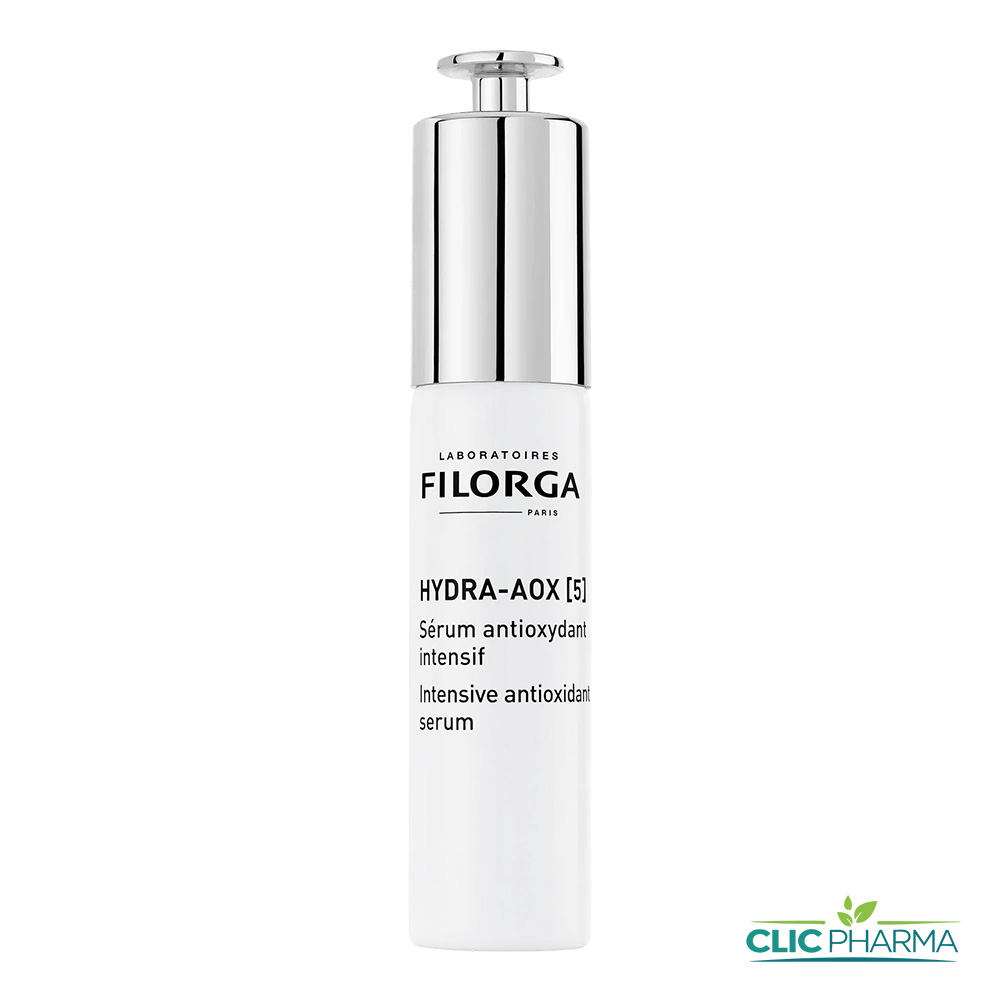
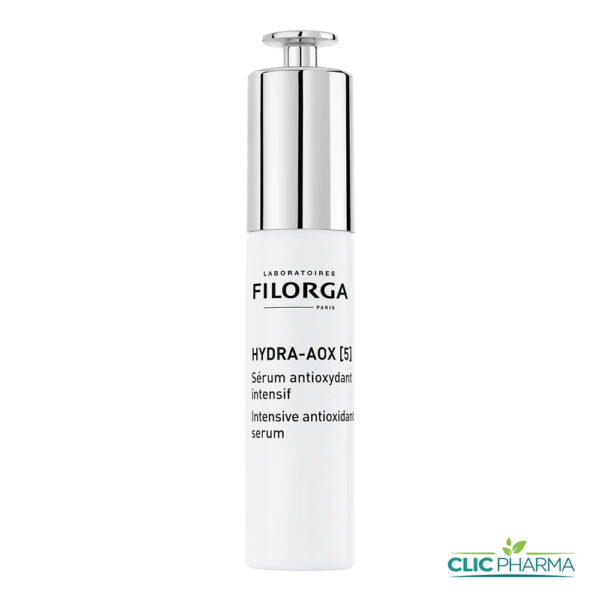
Nom du produit : HYDRA-AOX [5] (Sérum Antioxydant Intensif)
-
Gamme : HYDRA / Hydratation & Éclat
-
Type de produit : Sérum bouclier antioxydant haute performance
-
Contenance : 30 ml (Flacon pipette)
-
Cible : Peaux exposées aux agressions extérieures (pollution, stress, UV), présentant des ridules, un grain de peau irrégulier et un teint terne. Convient à tous les types de peaux.
Description du produit
Le HYDRA-AOX [5] est un sérum de pointe conçu pour protéger la peau du vieillissement prématuré tout en corrigeant les premiers signes de l’âge. Sa formule unique concentre 5 antioxydants puissants [Vitamine C + Vitamine E + Astaxanthine + Ergothionéine + Vitamine B3] associés à l’acide hyaluronique. Sa texture légère et sensorielle, d’une couleur orangée naturelle due à l’astaxanthine, pénètre instantanément pour lisser les ridules et booster l’éclat du teint durablement.
Bienfaits
Ce sérum protecteur déploie une action multi-correctrice et préventive :
-
Protection Antioxydante 5-en-1 : Neutralise les radicaux libres responsables du vieillissement cutané induit par l’environnement.
-
Lissage des Ridules : L’acide hyaluronique de bas poids moléculaire hydrate en profondeur et lisse les premières marques du temps.
-
Éclat & Teint Unifié : La Vitamine C associée à la Vitamine B3 (Niacinamide) réduit les irrégularités du teint pour une luminosité retrouvée.
-
Grain de Peau Affiné : Améliore visiblement la texture de la peau en resserrant les pores et en lissant le relief cutané.
Mode d’emploi
-
Application : S’utilise quotidiennement le matin (pour la protection) et le soir.
-
Zone : Visage et cou.
-
Gestuelle : Prélever quelques gouttes à l’aide de la pipette. Appliquer sur une peau propre par des pressions légères du centre du visage vers l’extérieur.
-
Routine : Appliquer impérativement avant votre crème de jour pour que les antioxydants fassent barrière contre les agressions de la journée.
Astuces
-
Bouclier Urbain : C’est le sérum idéal pour les citadins ; il agit comme un filtre invisible contre la pollution et les particules fines qui ternissent le teint.
-
Préparation au Soleil : Utilisé sous une protection solaire le matin, il renforce les capacités de défense de la peau face aux dommages oxydatifs causés par les UV.
-
Éclat Immédiat : Sa texture fluide laisse un fini frais et soyeux, ce qui en fait une base parfaite pour le maquillage, permettant un meilleur maintien du fond de teint.
Composition détaillée
La formule associe un cocktail d’antioxydants purs à la technologie poly-revitalisante :
Liste INCI : AQUA (WATER, EAU), GLYCERIN, PROPANEDIOL, NIACINAMIDE (Vitamine B3), ASCORBYL GLUCOSIDE (Vitamine C), SODIUM CHLORIDE, 1,2-HEXANEDIOL, PHENOXYETHANOL, SUCROSE PALMITATE, SODIUM HYALURONATE, SODIUM HYDROXIDE, PARFUM (FRAGRANCE), GLYCERYL LINOLEATE, PRUNUS AMYGDALUS DULCIS (SWEET ALMOND) OIL, ETHYLHEXYLGLYCERIN, TOCOPHERYL ACETATE (Vitamine E), ERGOTHIONEINE, ASTAXANTHIN, CITRIC ACID, POTASSIUM SORBATE, GLUCOSE, POTASSIUM CHLORIDE, CALCIUM CHLORIDE, MAGNESIUM SULFATE, GLUTAMINE, SODIUM PHOSPHATE, ASCORBIC ACID, SODIUM ACETATE, LYSINE HCL, ARGININE HCL, ALANINE, HISTIDINE HCL, VALINE, LEUCINE, THREONINE, ISOLEUCINE, TRYPTOPHAN, PHENYLALANINE, TYROSINE, GLYCINE, POLYSORBATE 80, SERINE, CYSTINE, CYANOCOBALAMIN, GLUTATHIONE, ASPARAGINE, ASPARTIC ACID, ORNITHINE HCL, GLUTAMIC ACID, NICOTINAMIDE ADENINE DINUCLEOTIDE, PROLINE, METHIONINE, TAURINE, HYDROXYPROLINE, GLUCOSAMINE HCL, COENZYME A, SODIUM GLUCURONATE, THIAMINE DIPHOSPHATE, RETINYL ACETATE, INOSITOL, NIACIN, PYRIDOXINE HCL, BIOTIN, CALCIUM PANTOTHENATE, RIBOFLAVIN, SODIUM TOCOPHERYL PHOSPHATE, THIAMINE HCL, FOLIC ACID.
FILORGA HYDRA-AOX FL 30ML
Avis
Clear filtersIl n’y a pas encore d’avis.