
Présentation générale :
-
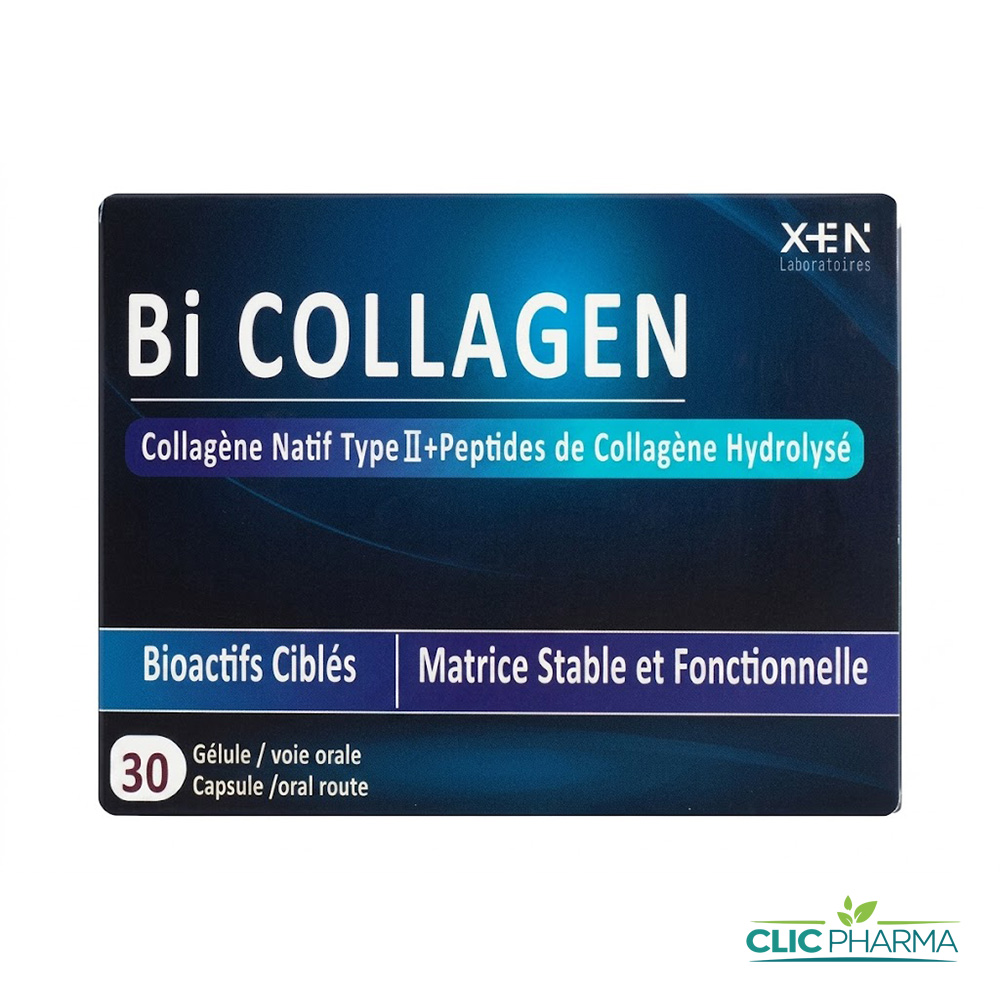
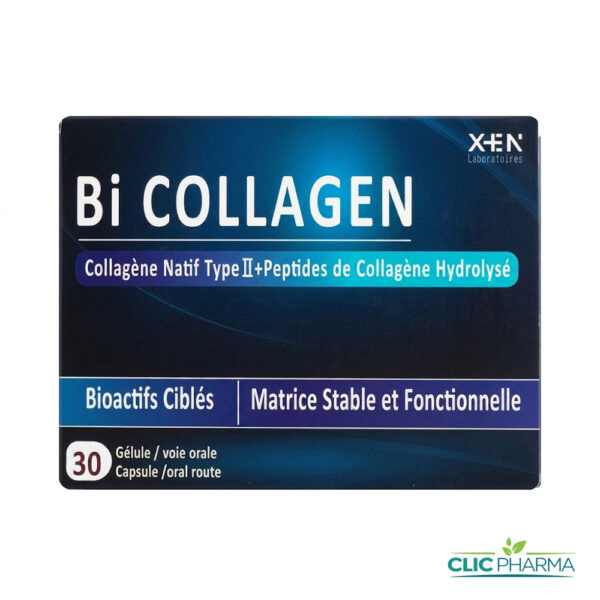
Nom du produit : Bi COLLAGEN
-
Gamme : Bioactifs Ciblés / Matrice Stable et Fonctionnelle
-
Type de produit : Complément alimentaire en gélules
-
Contenance : Boîte de 30 gélules
-
Cible : Personnes recherchant un soutien structurel pour les tissus conjonctifs, la peau ou les articulations grâce à une synergie de collagène.
Description du produit
Le produit est un complément alimentaire de la marque XEN Laboratoires. Il se base sur une approche scientifique combinant deux types de collagène complémentaires pour offrir une formule hautement fonctionnelle. Présenté sous forme de gélules à l’administration pratique par voie orale, ce produit intègre le concept de bioactifs ciblés pour agir efficacement sur la régénération structurelle de l’organisme.
Bienfaits
-
Double synergie structurelle : Associe deux formes distinctes de collagène pour une efficacité optimale sur les tissus ciblés.
-
Soutien fonctionnel : Participe au maintien d’une matrice stable et fonctionnelle au sein des structures conjonctives.
-
Assimilation ciblée : Utilise des bioactifs spécifiquement sélectionnés pour interagir de façon ciblée avec les besoins de l’organisme.
Mode d’emploi
-
Conseils d’utilisation : Prendre 1 gélule/jour par voie orale avec un grand verre d’eau.
-
Posologie : Suivre les indications journalières recommandées, adaptées pour une cure complète de 30 jours.
Astuces
-
Régularité de la prise : Pour une efficacité maximale, il est conseillé de prendre les gélules à un moment fixe de la journée, idéalement au cours d’un repas.
-
Hydratation globale : Maintenez une bonne consommation d’eau tout au long de la journée pour accompagner l’action de la matrice de collagène.
Composition
-
Collagène Natif Type II : Forme de collagène structurellement intacte, particulièrement reconnue pour cibler les tissus articulaires et cartilagineux.
-
Peptides de Collagène Hydrolysé : Molécules de collagène fragmentées en peptides plus petits, hautement biodisponibles pour une absorption rapide et une action régénératrice globale.
BI COLLAGEN GELULES B 30
Avis
Clear filtersIl n’y a pas encore d’avis.