
Présentation générale
-
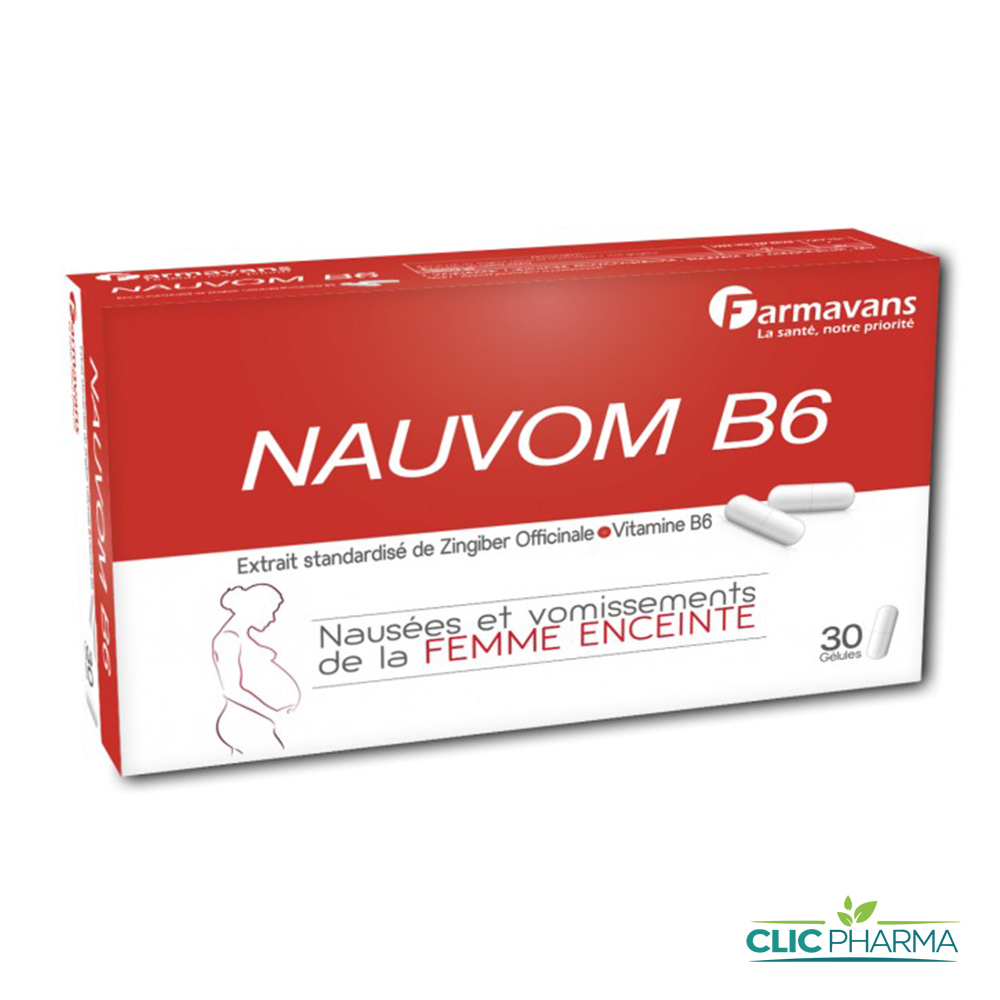
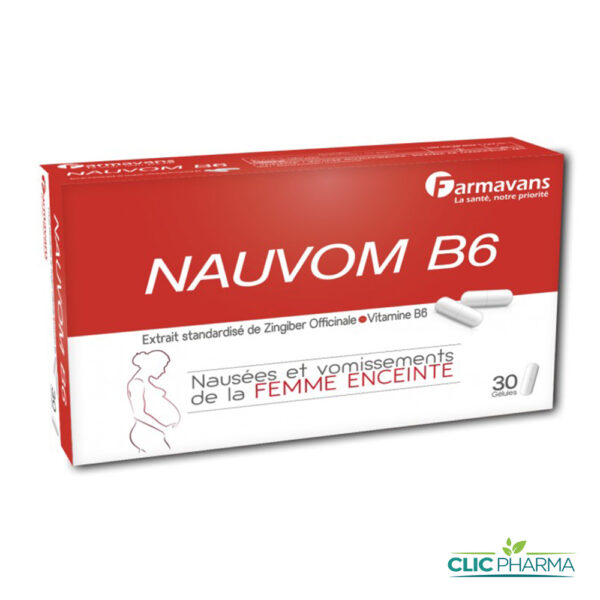
Nom du produit : Nauvom B6
-
Gamme : Confort Digestif et Équilibre (Farmavans)
-
Type de produit : Complément alimentaire (Gélules)
-
Contenance : Boîte de 30 gélules
-
Cible : Adultes, femmes enceintes (sous avis médical) et personnes sujettes aux nausées persistantes ou aux troubles digestifs liés à la fatigue nerveuse.
Description du produit
Le Nauvom B6 est une évolution de la formule classique, enrichie en Vitamine B6 pour une action renforcée. Ce complément alimentaire utilise les propriétés anti-émétiques naturelles du Gingembre pour calmer les spasmes de l’estomac et réduire les sensations de haut-le-cœur. L’ajout de la Vitamine B6 permet d’agir de manière complémentaire sur le système nerveux, offrant une solution plus globale pour les nausées qui peuvent être accentuées par le stress ou les changements hormonaux.
Bienfaits
-
Double action anti-nauséeuse : Le gingembre calme l’estomac tandis que la vitamine B6 soutient l’équilibre nerveux.
-
Confort de la femme enceinte : Aide à apaiser les nausées matinales durant le premier trimestre (toujours consulter un professionnel de santé).
-
Digestion facilitée : Stimule la sécrétion de bile et l’activité des enzymes digestives pour un transit plus fluide.
-
Réduction de la fatigue : La Vitamine B6 contribue à réduire l’épuisement souvent associé aux troubles digestifs chroniques.
-
Format économique : La boîte de 30 gélules permet une cure complète d’un mois pour stabiliser le confort digestif.
Mode d’emploi
-
Posologie : Prendre 1 gélule par jour avec un grand verre d’eau.
-
Moment de prise : De préférence le matin au réveil ou 30 minutes avant un repas.
-
Précautions : Ne pas dépasser la dose journalière. Les compléments alimentaires doivent être utilisés dans le cadre d’un mode de vie sain et non comme substituts d’un régime alimentaire varié.
Astuces
-
Anticipation matinale : Pour les nausées au réveil, laissez la boîte sur votre table de chevet et prenez votre gélule avec un peu d’eau avant même de vous lever.
-
Synergie zen : En cas de nausées liées au stress, pratiquez quelques respirations abdominales profondes après la prise de la gélule pour détendre le diaphragme.
-
Conservation : Gardez le produit dans un endroit sec et à l’abri de la lumière pour préserver l’intégrité des actifs du gingembre.
Composition détaillée
La formulation associe un actif végétal puissant à une vitamine essentielle :
-
Extrait de Gingembre (Zingiber officinale) : Standardisé en gingérols pour une action anti-nauséeuse optimale.
-
Vitamine B6 (Pyridoxine) : Contribue à la régulation de l’activité hormonale et au fonctionnement normal du système nerveux.
-
Excipients : Amidon de maïs, stéarate de magnésium, talc.
-
Enveloppe : Gélatine d’origine bovine (Halal).
NAUVOM B6 NAUSEES GELULE B 30
Avis
Clear filtersIl n’y a pas encore d’avis.