
Présentation générale
-
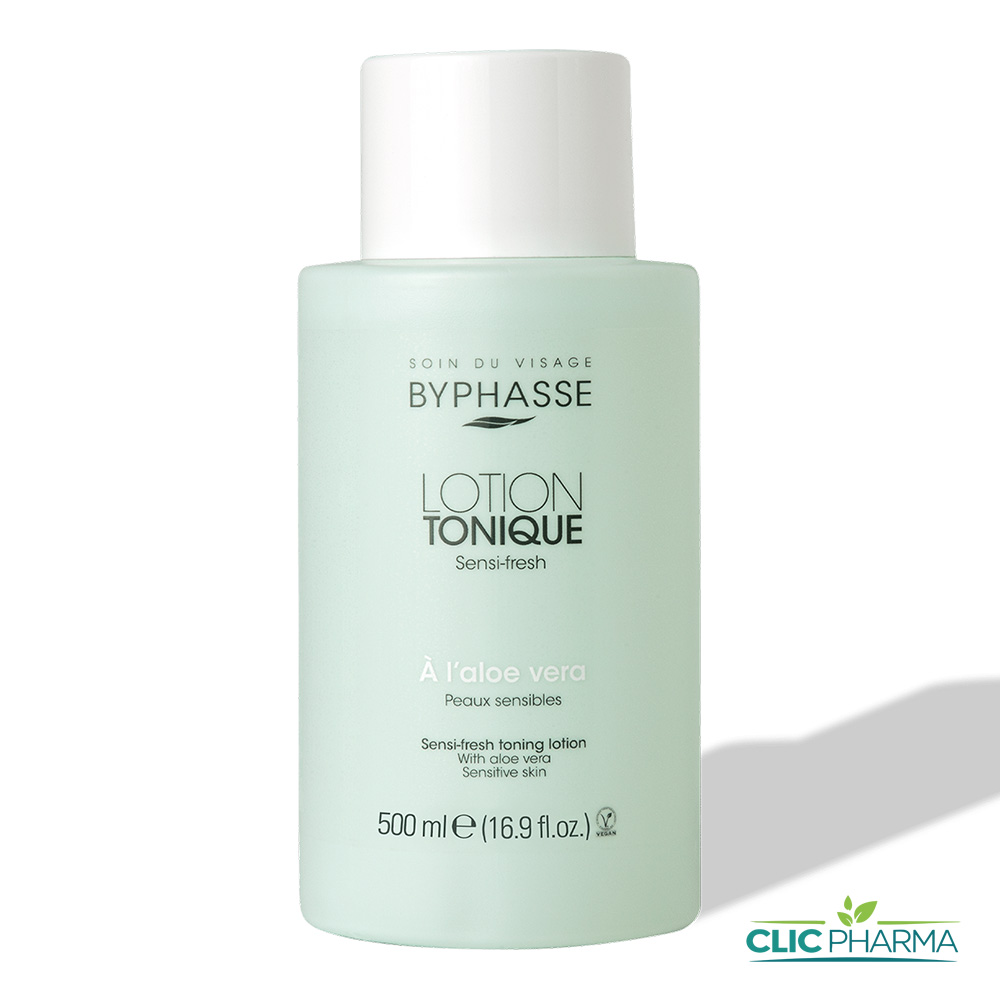
Nom du produit : Lotion Tonique Sensi-Fresh à l’Aloe Vera
-
Gamme : Sensi-Fresh / Visage
-
Type de produit : Soin tonifiant et apaisant
-
Contenance : 500 ml
-
Cible : Peaux sensibles
-
Ingrédient star : Aloe Vera naturelle
Description du produit
La lotion tonique Sensi-Fresh de BYPHASSE à l’aloe vera est l’étape essentielle pour parfaire le démaquillage et réveiller le teint des peaux sensibles. Sa formule douce élimine les dernières impuretés tout en respectant l’équilibre fragile de l’épiderme. Grâce aux vertus de l’aloe vera, elle apporte une sensation de fraîcheur immédiate et laisse la peau souple, nette et apaisée. Sa texture liquide pénètre instantanément sans laisser de film collant, préparant idéalement le visage à recevoir ses soins habituels.
Bienfaits
-
Nettoyage Final : Élimine les résidus de maquillage et les traces de pollution.
-
Action Apaisante : Calme les sensations d’échauffement et les rougeurs des peaux réactives.
-
Hydratation & Fraîcheur : L’aloe vera désaltère l’épiderme dès l’application.
-
Teint Éclatant : Tonifie la peau pour un aspect plus sain et reposé.
-
Équilibre Cutané : Aide à maintenir le pH naturel de la peau après le nettoyage.
-
Confort Immédiat : Laisse la peau douce et veloutée, sans tiraillements.
Mode d’emploi
-
Imbibez un coton de lotion tonique.
-
Appliquez sur le visage et le cou après le démaquillage.
-
Lissez doucement de l’intérieur vers l’extérieur du visage, sans frotter.
-
Laissez sécher ou tamponnez délicatement avec un mouchoir.
-
Utilisez matin et soir pour un résultat optimal.
Composition & Propriétés
-
Aloe Vera : Reconnu pour ses propriétés hydratantes, cicatrisantes et hautement protectrices.
-
Glycérine : Capte l’humidité pour maintenir la souplesse de la couche cornée.
-
Agents Tonifiants Doux : Revitalisent la peau sans l’agresser.
-
Sans Alcool : Formule conçue pour minimiser les risques d’irritation.
Points forts
-
Format Généreux 500 ml : Un flacon maxi format pour une utilisation quotidienne prolongée.
-
Haute Tolérance : Spécialement formulé pour les peaux qui ne supportent pas les toniques classiques.
-
Sensation Non Grasse : Procure une pureté absolue et une peau qui « respire ».
-
Vegan : Garanti sans ingrédients d’origine animale.
Astuces
Pour un effet décongestionnant et ultra-frais le matin, conservez votre flacon de Lotion Tonique Sensi-Fresh au réfrigérateur : le froid boostera la microcirculation et aidera à réveiller les traits. Elle est le complément parfait après l’utilisation des Lingettes Démaquillantes à l’Aloe Vera ou de la Solution Micellaire Peaux Sensibles. Appliquez ensuite votre Sérum Skin Booster à l’Acide Hyaluronique sur une peau encore légèrement humide pour une absorption maximale des actifs.
Composition détaillée (INCI)
Aqua (Water), Aloe Barbadensis Leaf Juice, Phenoxyethanol, PEG-40 Hydrogenated Castor Oil, Chlorphenesin, Parfum (Fragrance), 2-Bromo-2-Nitropropane-1,3-Diol, Potassium Sorbate, Sodium Benzoate, Benzyl Salicylate, Geraniol, Hexyl Cinnamal, Linalool.
BYPHASSE LOTION TONIQUE A L ALOE VERA 500ML

Avis
Clear filtersIl n’y a pas encore d’avis.