
Présentation générale
-
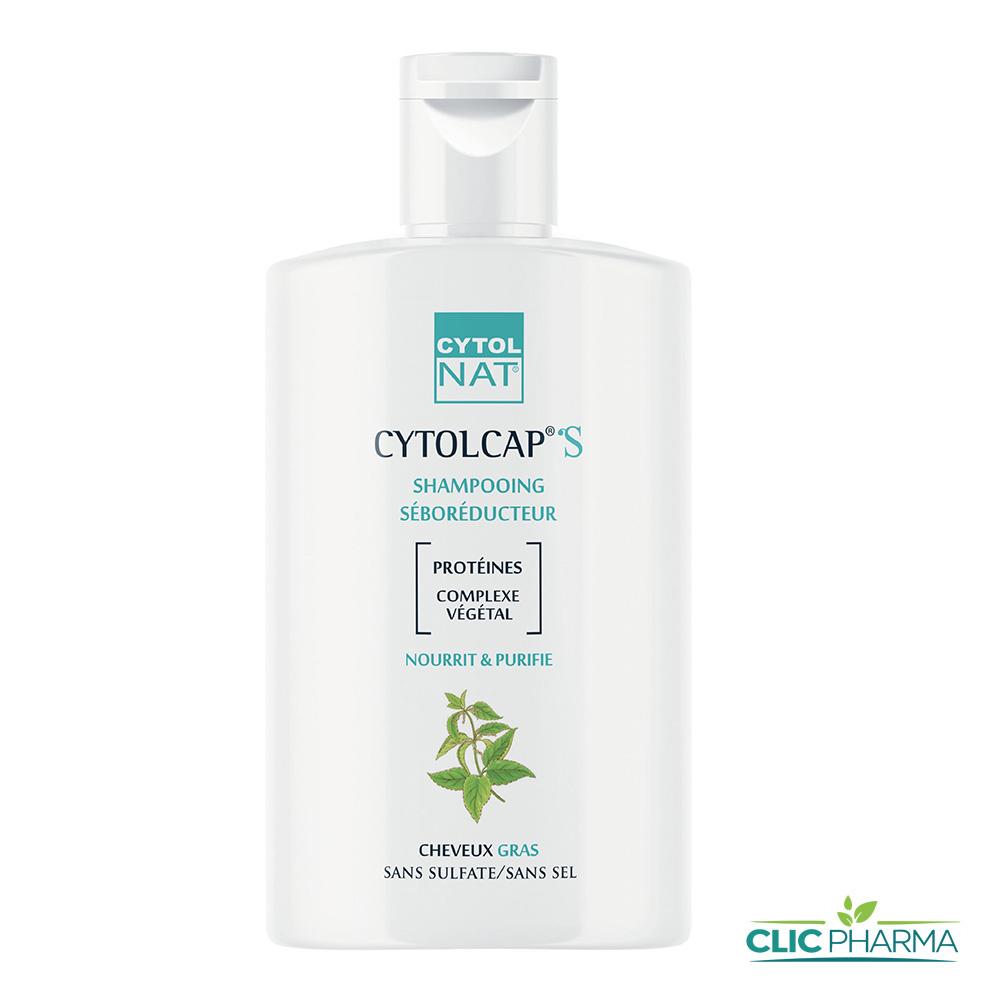
Nom du produit : CYTOLCAP S (Séboréducteur)
-
Gamme : Soin Capillaire / Équilibre du cuir chevelu
-
Type de produit : Shampooing traitant purifiant et régulateur
-
Contenance : Flacon de 200 ml
-
Cible : Cheveux gras, cuirs chevelus à tendance grasse ou présentant des états pelliculaires gras.
Description du produit
Le CYTOLCAP S est un shampooing spécifique conçu pour assainir durablement le cuir chevelu et réguler la production excessive de sébum. Sa formule équilibrante permet de nettoyer en profondeur sans provoquer d’hyperséborrhée réactionnelle (effet rebond). En libérant le cuir chevelu de ses impuretés et de l’excès de gras, il redonne légèreté et volume aux cheveux qui ont tendance à « regraisser » trop vite. Il aide également à espacer la fréquence des lavages tout en apportant une sensation de fraîcheur immédiate.
Bienfaits
-
Régulation du Sébum : Inhibe l’activité excessive des glandes sébacées.
-
Purification : Assainit le cuir chevelu et élimine les résidus de pollution ou de produits coiffants.
-
Volume et Légèreté : Décolle les racines et redonne du mouvement aux cheveux lourds.
-
Action Apaisante : Calme les démangeaisons et les irritations souvent liées à l’excès de sébum.
-
Anti-Pelliculaire : Aide à réduire les pellicules grasses en limitant la prolifération des micro-organismes.
Mode d’emploi
-
Application : Appliquez une noisette de shampooing sur cheveux mouillés.
-
Massage : Massez doucement le cuir chevelu du bout des doigts (sans frotter vigoureusement pour ne pas exciter les glandes sébacées).
-
Temps de pose : Laissez agir 3 minutes pour permettre aux actifs purifiants de stabiliser le cuir chevelu.
-
Rinçage : Rincez abondamment à l’eau tiède (évitez l’eau chaude).
Composition
Ce shampooing utilise des agents purifiants et régulateurs :
-
Extraits végétaux séborégulateurs : Souvent à base de plantes comme l’ortie ou la bardane pour leurs vertus astringentes.
-
Zinc ou agents purifiants : Pour limiter la prolifération bactérienne et fongique.
-
Protéines de Soja : Pour gainer le cheveu sans l’alourdir.
-
Base lavante équilibrée : Sans agents surgraissants excessifs pour maintenir la légèreté.
Astuces
-
La température de l’eau : Rincez vos cheveux à l’eau tiède ou froide. L’eau chaude stimule la production de sébum et rend les cheveux gras plus rapidement.
-
Fréquence : Ne lavez pas vos cheveux tous les jours si possible ; l’utilisation du CytolCap S vous aidera progressivement à espacer les shampooings tous les 2 ou 3 jours.
-
Séchage : Utilisez le sèche-cheveux à température moyenne et maintenez-le à bonne distance des racines pour ne pas « chauffer » le cuir chevelu.
Composition détaillée
AQUA (WATER) • SODIUM LAURETH SULFATE • COCAMIDOPROPYL BETAINE • GLYCERIN • HYDROLYSED SOY PROTEIN • ZINC PCA • CITRIC ACID • SODIUM CHLORIDE • PHENOXYETHANOL • ETHYLHEXYLGLYCERIN • TOCOPHERYL ACETATE • FRAGRANCE (PARFUM) • TETRASODIUM EDTA.
CYTOLNAT CYTOLCAP SHAMP SEBOREDUCATEUR CHVX GRAS 200ML

Avis
Clear filtersIl n’y a pas encore d’avis.