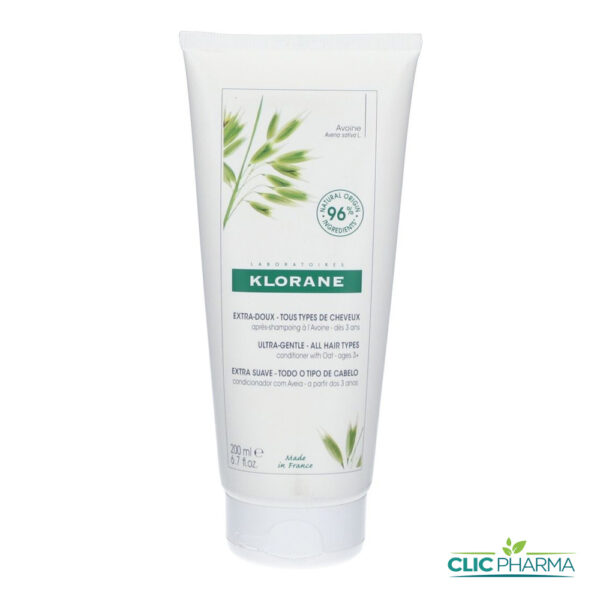
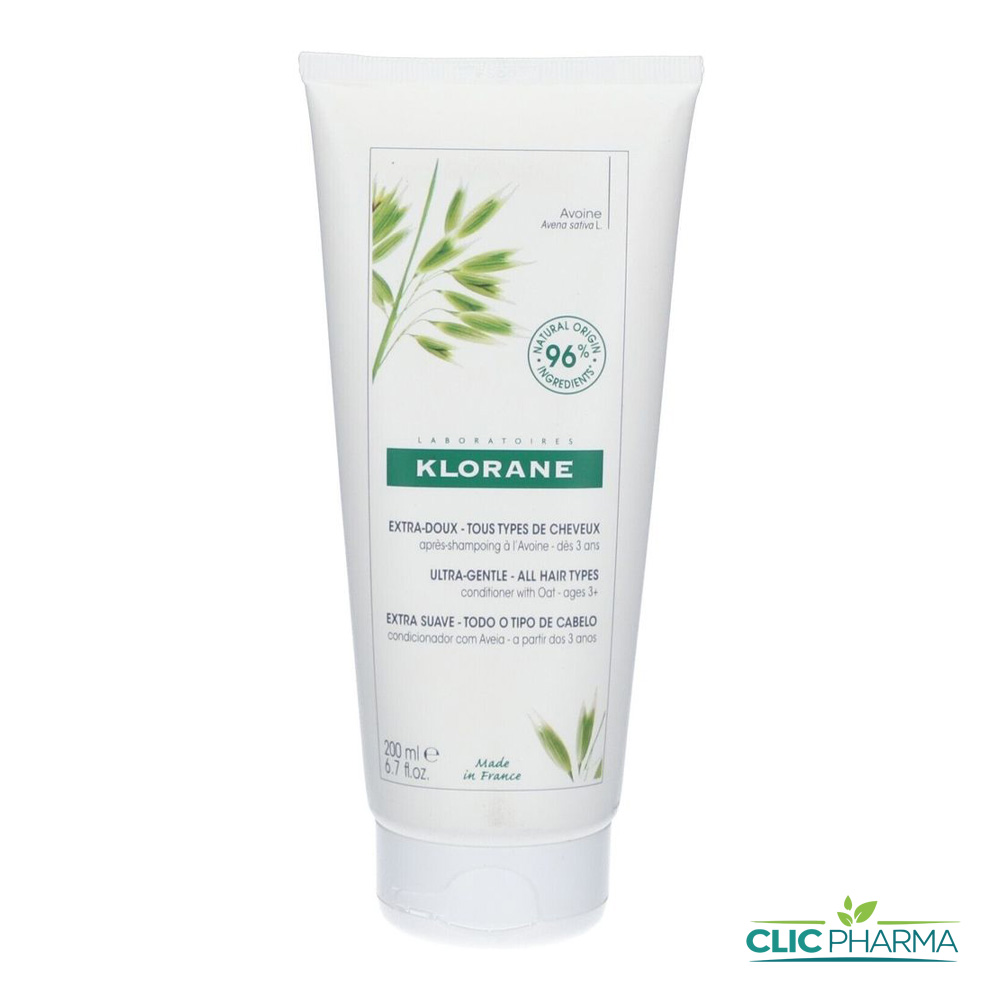
KLORANE BAUME APRES-SHAMPOING A L’AVOINE 200 ML


Nom du produit : Après-shampoing au Lait d’Avoine BIO

Gamme : Avoine (Douceur)

Type de produit : Baume après-shampoing démêlant et protecteur

Contenance : Tube de 200 ml

Cible : Tous types de cheveux, pour toute la famille dès 3 ans

27,653 TND TTC

Rupture de stock

11 Des personnes regardent ce produit en ce moment !

Présentation générale :

Nom du produit : Après-shampoing au Lait d’Avoine BIO

Gamme : Avoine (Douceur)

Type de produit : Baume après-shampoing démêlant et protecteur

Contenance : Tube de 200 ml

Cible : Tous types de cheveux, pour toute la famille dès 3 ans

Description et bénéfices

L’Après-shampoing à l’Avoine BIO de Klorane est un soin d’une extrême douceur conçu pour hydrater et démêler les cheveux de toute la famille. Sa texture fondante respecte l’équilibre naturel de la fibre capillaire.

  • Démêlage instantané : Facilite le coiffage et discipline les cheveux sans les alourdir.

  • Hydratation et protection : Grâce à sa richesse en glucides, lipides et vitamines, il hydrate et gaine le cheveu pour le protéger des agressions quotidiennes.

  • Extrême douceur : Formulé avec de l’Avoine BIO cultivée en circuit court dans le sud-ouest de la France, il apporte un toucher soyeux et de la souplesse.

  • Haute tolérance : Testé sous contrôle dermatologique et pédiatrique, il convient parfaitement aux cuirs chevelus les plus délicats.

Caractéristiques techniques

  • Origine : 96 % d’ingrédients d’origine naturelle.

  • Texture : Baume onctueux et léger qui se rince facilement.

  • Engagement : Formule biodégradable (selon la norme OCDE 301B), sans silicone et sans huiles minérales.

  • Éco-conception : Tube intégrant 50 % de plastique recyclé.

Conseils d’utilisation

  1. Appliquer sur les cheveux rincés et essorés, après le shampoing.

  2. Répartir sur les longueurs et les pointes.

  3. Laisser agir 2 à 3 minutes pour une efficacité optimale.

  4. Démêler puis rincer abondamment à l’eau claire.

Composition

La liste des ingrédients (INCI) est la suivante : WATER (AQUA). CETYL ALCOHOL. ETHYLHEXYL PALMITATE. BEHENAMIDOPROPYL DIMETHYLAMINE. DICAPRYLYL CARBONATE. AVENA SATIVA (OAT) LEAF/STEM EXTRACT (AVENA SATIVA LEAF/STEM EXTRACT). 1,2-HEXANEDIOL. BENZOIC ACID. CETEARYL ALCOHOL. CETEARYL GLUCOSIDE. FRAGRANCE (PARFUM). GLYCINE SOJA (SOYBEAN) OIL (GLYCINE SOJA OIL). HELIANTHUS ANNUUS (SUNFLOWER) SEED OIL (HELIANTHUS ANNUUS SEED OIL). LACTIC ACID. SCLEROTIUM GUM. TOCOPHEROL.

KLORANE LAIT D’AVOINE BAUME 200 ML

Avis des clients

Avis
0
0
0
0
0

Il n’y a pas encore d’avis.

Soyez le premier à laisser votre avis sur “KLORANE BAUME APRES-SHAMPOING A L’AVOINE 200 ML”

Votre adresse e-mail ne sera pas publiée. Les champs obligatoires sont indiqués avec *

You have to be logged in to be able to add photos to your review.

Online Sports Nutrition and Natural Dietetics.

Chances are there wasn't collaboration, communication, and checkpoints, there wasn't a process agreed upon or specified with the granularity required. It's content strategy gone awry right from the start. Forswearing the use of Lorem Ipsum wouldn't have helped, won't help now. It's like saying you're a bad designer, use less bold text, don't use italics in every other paragraph. True enough, but that's not all that it takes to get things back on track.

The villagers are out there with a vengeance to get that Frankenstein

You made all the required mock ups for commissioned layout, got all the approvals, built a tested code base or had them built, you decided on a content management system, got a license for it or adapted:

  • The toppings you may chose for that TV dinner pizza slice when you forgot to shop for foods, the paint you may slap on your face to impress the new boss is your business.
  • But what about your daily bread? Design comps, layouts, wireframes—will your clients accept that you go about things the facile way?
  • Authorities in our business will tell in no uncertain terms that Lorem Ipsum is that huge, huge no no to forswear forever.
  • Not so fast, I'd say, there are some redeeming factors in favor of greeking text, as its use is merely the symptom of a worse problem to take into consideration.
  • Websites in professional use templating systems.
  • Commercial publishing platforms and content management systems ensure that you can show different text, different data using the same template.
  • When it's about controlling hundreds of articles, product pages for web shops, or user profiles in social networks, all of them potentially with different sizes, formats, rules for differing elements things can break, designs agreed upon can have unintended consequences and look much different than expected.

This is quite a problem to solve, but just doing without greeking text won't fix it. Using test items of real content and data in designs will help, but there's no guarantee that every oddity will be found and corrected. Do you want to be sure? Then a prototype or beta site with real content published from the real CMS is needed—but you’re not going that far until you go through an initial design cycle.